


General information
- Duration
-
3 years
- Places
- International
- Available to
-
- Initial course
- Resumption of training
You are here : Home > Course offer > Undergraduate

European School of Law
Offices AR 330 - 332 - 334
E-mail: esl@ut-capitole.fr
Tel: +335 61 63 38 84/39 14
Undergraduate Law Studies:
Year 1 : Bureau AR 16
scoldroitls1@ut-capitole.fr
+335 61 63 27 73
Year 2 : Bureau AR 16
scoldroitls2@ut-capitole.fr
+335 61 63 27 73
Year 3 : Bureau AR 18ter
scoldroitls3@ut-capitole.fr
+335 61 63 39 80
 Visit the handicap portal
This dual competence, the fluency in two specialised languages and the experience of student mobility are undeniable assets for lawyers wishing to work in transnational fields and, more generally, internationally.
The first two years are based in Toulouse. The third year is spent abroad at a partner university.
International
Due to limited capacity, all courses at the European School of Law are subject to a selection process. In addition to the qualities required for legal studies, this course requires a very strong motivation to pursue legal studies in a multicultural context (compulsory period of study in a partner university) and a solid command of French and English (at least level B2 of the Common European Framework of Reference for Languages).
Holders or prospective holders of the French baccalaureate or an equivalent diploma from the European Union, the European Economic Area or the Swiss Confederation must apply on the website www.parcoursup.fr between 17 January 2024 and 14 March 2024.
Candidates will be short-listed and then interviewed. The timetable and interview procedures will be finalised in the first quarter of 2024.
Other candidates should contact: esl@ut-capitole.fr
|
|
|
|
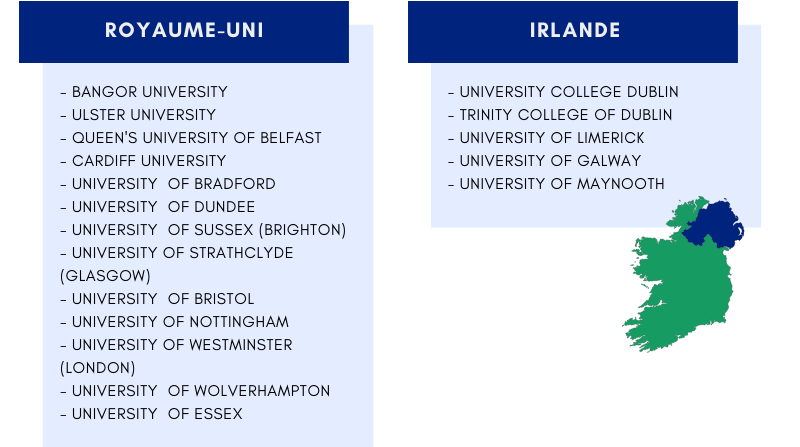
The third year is spent abroad at a partner university (usually in the UK or Ireland). Students are placed according to their preferences and results. They are supervised by an academic advisor who validates their choice of courses.
Students pay enrolment fees to UT Capitole (and not to the partner university). Under certain conditions, they can benefit from mobility grants. Students who have been awarded a grant on the basis of social criteria retain their grant.
Students also have the option of taking a double degree with University College Dublin or Bangor University by spending two years abroad instead of one.
Here are some examples of mobility:
Teaching methods and resources:
In addition to the traditional approach of lectures combined with tutorials, students may be offered role-plays and practical case studies, all of which provide learning opportunities. These courses are taught in dedicated, well-equipped classrooms, lecture theatres and language laboratories. Students also have free access to a range of University resources, including computer rooms and the shared documentation service.
Various information and steps that need to be taken in relation to Brexit and applying for a visa to stay in the UK:
The government's Brexit preparation portal- After 3rd year French Law and Common Law (180 credits validated):
Access subject to selection: Master's degrees offered by the Faculty of Law and Political Sciences (different majors and courses on offer).
Other options (subject to selection): Masters in Management, Masters programmes offered by Sciences Po (IEP), preparation for the category A competitive exams at the CPAG of Sciences Po Toulouse (subject to selection), Masters offered by other universities, Diploma in Notary professions, etc.
Other possibilities also exist, see the SUIO-IP online document.
See also the OFIP survey on the future of 3rd year graduates.
For more information:
The OFIP (Training and Professional Integration Observatory) studies the situation of former students 30 months after graduation, further studies, the process of entering the labour market, job characteristics (sectors, status, functions, professions, income, geographical mobility etc.).
You can check all OFIP studies on student careers and professional integration.